
Deepening Belonging and a Love of Learning with Elementary Students at Phillips Brooks School
As a School Partner for the 2025-2026 school year, Philips Brooks School moved through the Challenge Success Change Process to create a healthier elementary school environment by improving both student engagement and belonging in their elementary school community.
An important first step for every school in the partnership is to intentionally form their 10-person change team that meets with the Challenge Success Coach five times throughout the school year. Because the Challenge Success Change Process prioritizes the voice and perspective of students and actively includes multiple perspectives, cultures, and identities, all teams must include at least two students in addition to school staff and parents/caregivers. The PBS 2025-26 team included:
- 2 Students
- 4 Administrators
- 3 Parents
- 3 Teachers
The Phillips Brooks School partnered with Challenge Success to support meaningful student engagement and a strong sense of belonging. The team intentionally used student and parent survey data and qualitative data efforts to highlight strengths and guide thoughtful improvements to enhance the student experience.
Center the Student Experience
PBS’ student survey was crucial in helping the team to gain a deep understanding of student engagement and belonging in their community. The team examined their data and compared it to Challenge Success national averages, uncovering many bright spots as well as areas for growth:
Define an Improvement Aim
Through careful analysis of the data and collaborative reflection with their Challenge Success Coach, the team explored the factors contributing to the survey findings, identified emerging themes, and uncovered opportunities to strengthen belonging, engagement, and connection across the school community. By the end of Phase 1, the team had developed a shared understanding of the student experience and a clear direction for future action.
The team established a vision that Phillips Brooks School will strengthen students’ sense of belonging by elevating student voice, fostering meaningful engagement with families, and expanding student leadership opportunities—creating a more connected, inclusive community where all students feel known, valued, and supported.
To achieve their vision, the team set an aim to address:
- Student Engagement: Increase opportunities for students to actively participate in meaningful, relevant, and engaging learning experiences that foster a love of learning.
- Belonging: Strengthen students’ sense of belonging by creating intentional opportunities for connection, inclusion, and positive relationships across the school community.
- Student Leadership: Expand student leadership opportunities and elevate student voice in school decision-making to ensure students feel heard, valued, and empowered.
- Parent Education: Expand parent and student education opportunities focused on middle school readiness, helping families navigate the academic, social, and emotional changes that accompany this transition.
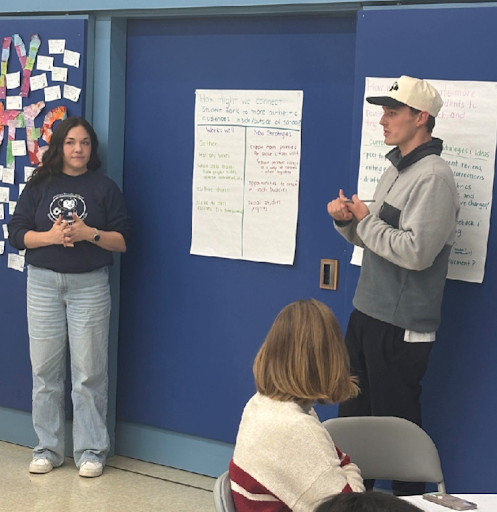
In Phase 2, the team is charged with co-designing change ideas with specific goals aligned with their vision. This process involves brainstorming, creative ideation, consulting with their coach, using practices from the SPACE Framework for School Change, and collaborating to create an action plan. Teams then put the plan into action by implementing change ideas, monitoring and assessing the progress as they move through Cycles of Inquiry.
Design + Test Change Ideas


Reflect on Progress
The following reflections were gathered at the end of the 2025-26 year:
“Taking the time to really systematize and prioritize our questioning and feedback has led to greater insight around student experience. We’re finding the more we survey, the more questions we have…Sharing data back with students has also been extremely helpful and helped continue to keep them in the driver’s seat at school.
Keeping student feedback at the center has led to not only changes in practice, but also elevated excitement and engagement just through the process itself. ..Without major changes in practice, simply recognizing the ways in which students can make true change helps elevate everyone’s sense of engagement.”
“I just wanted to say thank you for all your hard work on the Stanford survey. I really appreciate the time and thought that went into it—it’s so helpful for both the school and us parents…The questions really made me think, especially the one about how we define success for our kids. It was such a great reflection moment. Thank you so much for putting this together and for caring so deeply about our kids.”
PBS will continue elevating student voice by expanding leadership opportunities for fourth- and fifth-grade students, providing alumni-supported parent and student education workshops focused on middle school readiness, gathering ongoing student feedback, and supporting faculty in applying research-based engagement practices to create learning experiences that cultivate a love of learning for all students. Through a deliberate focus on listening to students, strengthening relationships, and creating opportunities for meaningful engagement, Phillips Brooks School has built a strong foundation for continued growth.
Associate Head of School for Academics Sara Poplack adds:
“With all of our ideas and initiatives, we’re looking at how to really systematize the efforts so that they just become part of what we do, rather than feel like an extra add. When we center the student experience and really think about how to make our ideas part of our culture or way of being, the additional steps actually make our lives easier. At the end of the day, when engagement, belonging, and well-being are high, the act of teaching is infinitely more inspiring to the adults as well – and that helps sustain all of us!”