
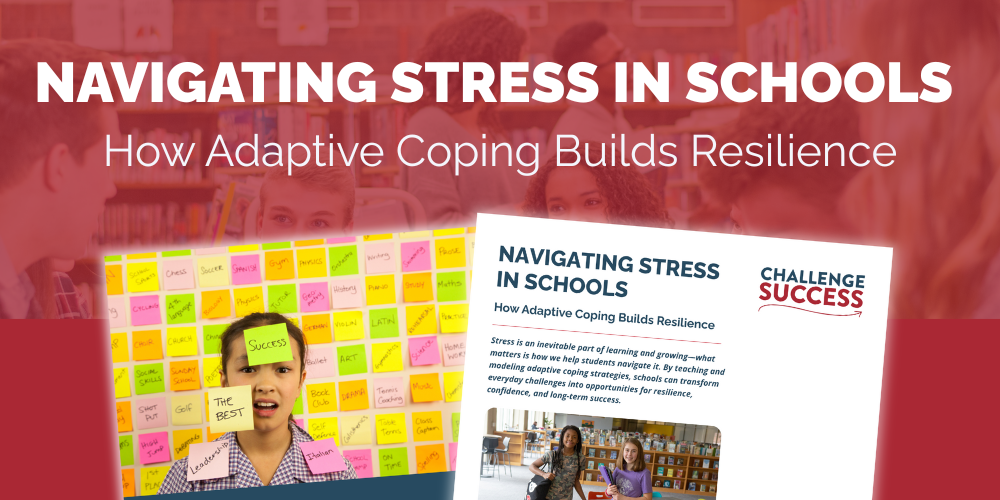
In recent years, conversations about adolescent mental health have increasingly focused on how to reduce or eliminate stress in school. This is a useful starting point for many school communities. In our research with schools we often find a significant amount of “unnecessary stress” stemming from factors such as unreasonably heavy course and extra curricular loads, high levels of pressure around admittance to elite universities, and assessment practices that rely on high stakes to create a sense of value and urgency. We characterize these stressors as “unnecessary” as they can be avoided without diminishing the quality and depth of the student educational experience.
A potential pitfall to this approach is when communities fall into an unhelpful “either/or” mindset related to stress. Either stress is seen as inherently harmful and must be avoided, or students are expected to handle it, without being shown how. Both perspectives miss the deeper opportunity for growth. Stress is an important part of adolescent development and learning; it becomes a problem when the quantity exceeds students’ capacity–when students lack the tools and support to navigate it.
Download the research brief bundle below to continue reading.