
By Margaret Dunlap, Senior School Partnership Coach for Challenge Success, and Sara Poplack, Associate Head of School for Academics, Phillips Brooks School
A conversation about how Phillips Brooks School, in partnership with Challenge Success, is building a stronger school community.
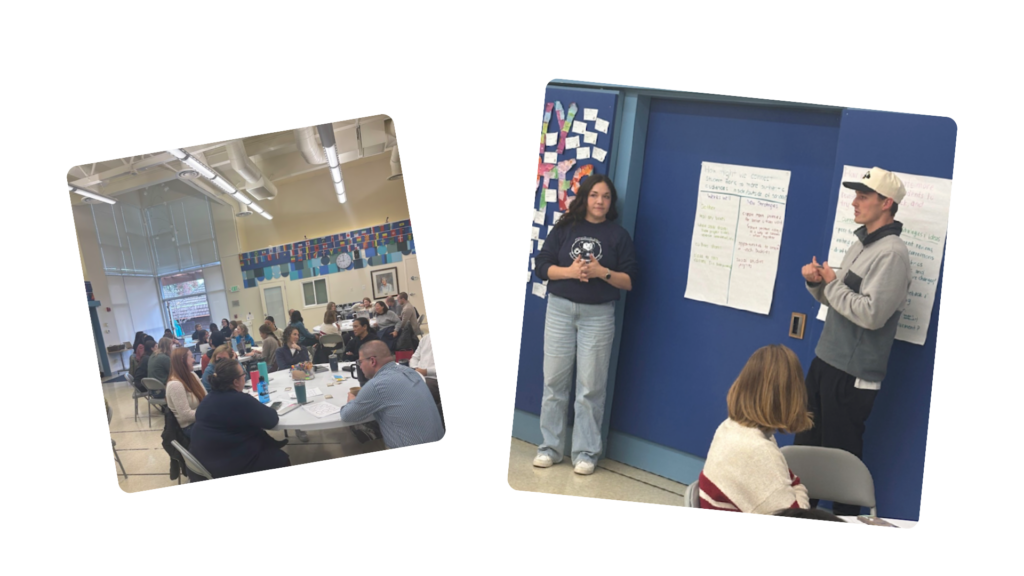
In today’s conversation, we connect with Sara Poplack, Associate Head of School for Academics at Phillips Brooks School, to explore how a dedicated school team, in partnership with Challenge Success, is doing the groundwork to strengthen well-being, engagement, and belonging. Through student feedback, intentional reflection, and collaborative action, this work is helping shape a school culture where students feel seen, heard, and valued.

Challenge Success (CS): What initially drew Phillips Brooks School to partner with Challenge Success, and what were you hoping to better understand or strengthen through the work?
Sara Poplack (SP): Many of the members of our administrative team have worked with Challenge Success in a variety of roles. We have administrators who have been involved in Challenge Success through their board as well as administrators who have worked in partnership with CS at other schools. The philosophy and core values of Challenge Success resonate deeply with our school and frameworks like PDF had previously been shared with our parents through our own design around parent education. When we heard that CS was starting to work with elementary schools we were eager to partner together and think about how this work is applicable and essential to an early education setting.
CS: When you think about success for young people, how do you define it at Phillips Brooks?
SP: At PBS, our core values are front and center in everything we do: courage, kindness, community, and love of learning. Successful young people are able to hold onto and even grow their love of learning as school gets more challenging, they display courage and kindness across settings, and they know what it means to be a positive community member both at school and in their other communities.
CS: When you looked at your Challenge Success survey results, what affirmed what you already knew—and what surprised you?
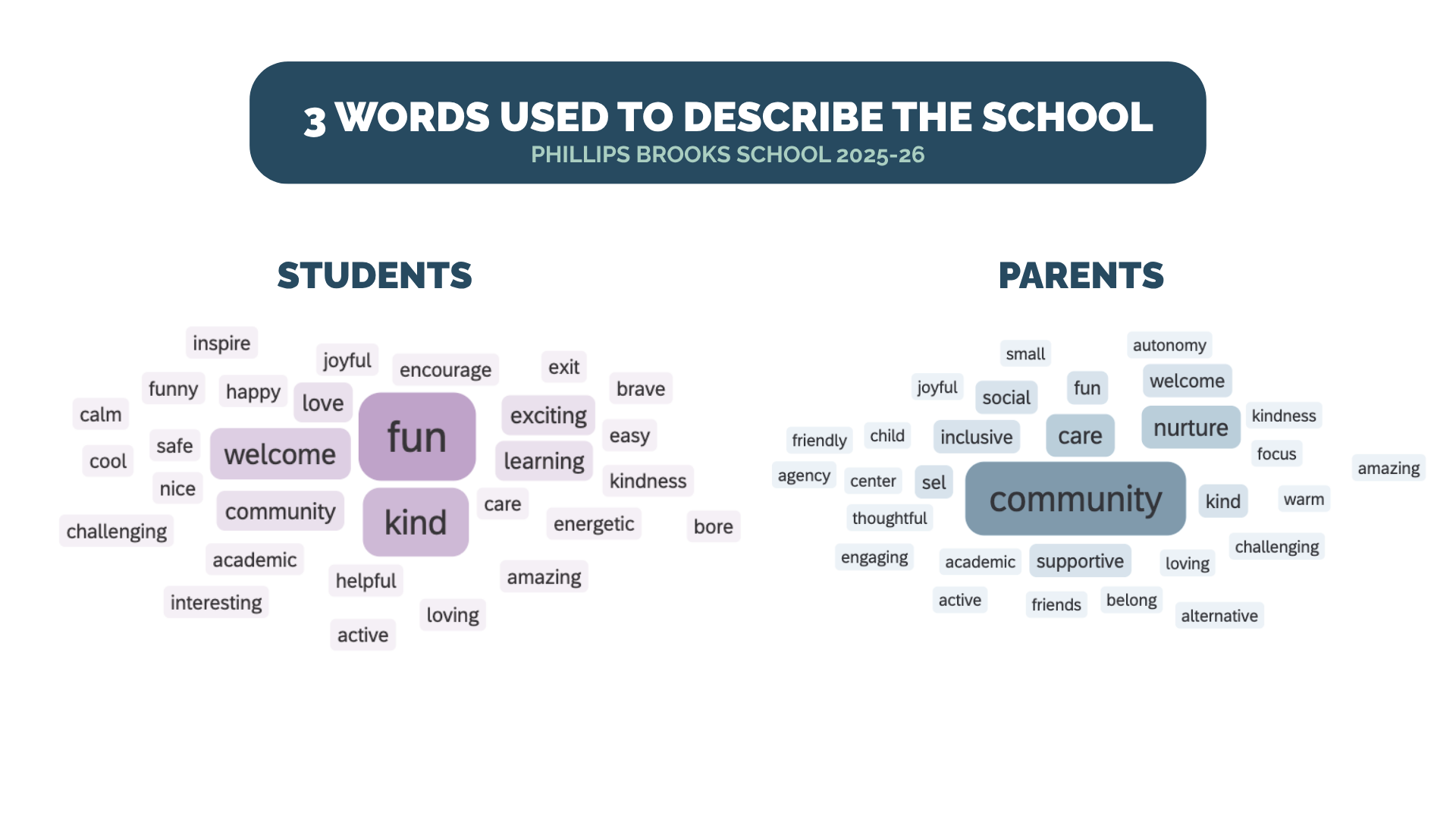
SP: It was great to hear that students experience school as a joyful, warm, and supportive place. We also saw pretty healthy numbers around stress levels and the amount of homework. It was exciting and affirming to see that kids feel connected to their peers and teachers. We were a bit surprised and curious to see the actual hours of non-school-related homework that students were reporting. While we knew that kids were doing various academic classes outside of school, the level of actual homework and the levels of stress around some of these classes was slightly higher than we would have expected.
CS: Were there particular insights from the data that helped clarify where your team wanted to focus?
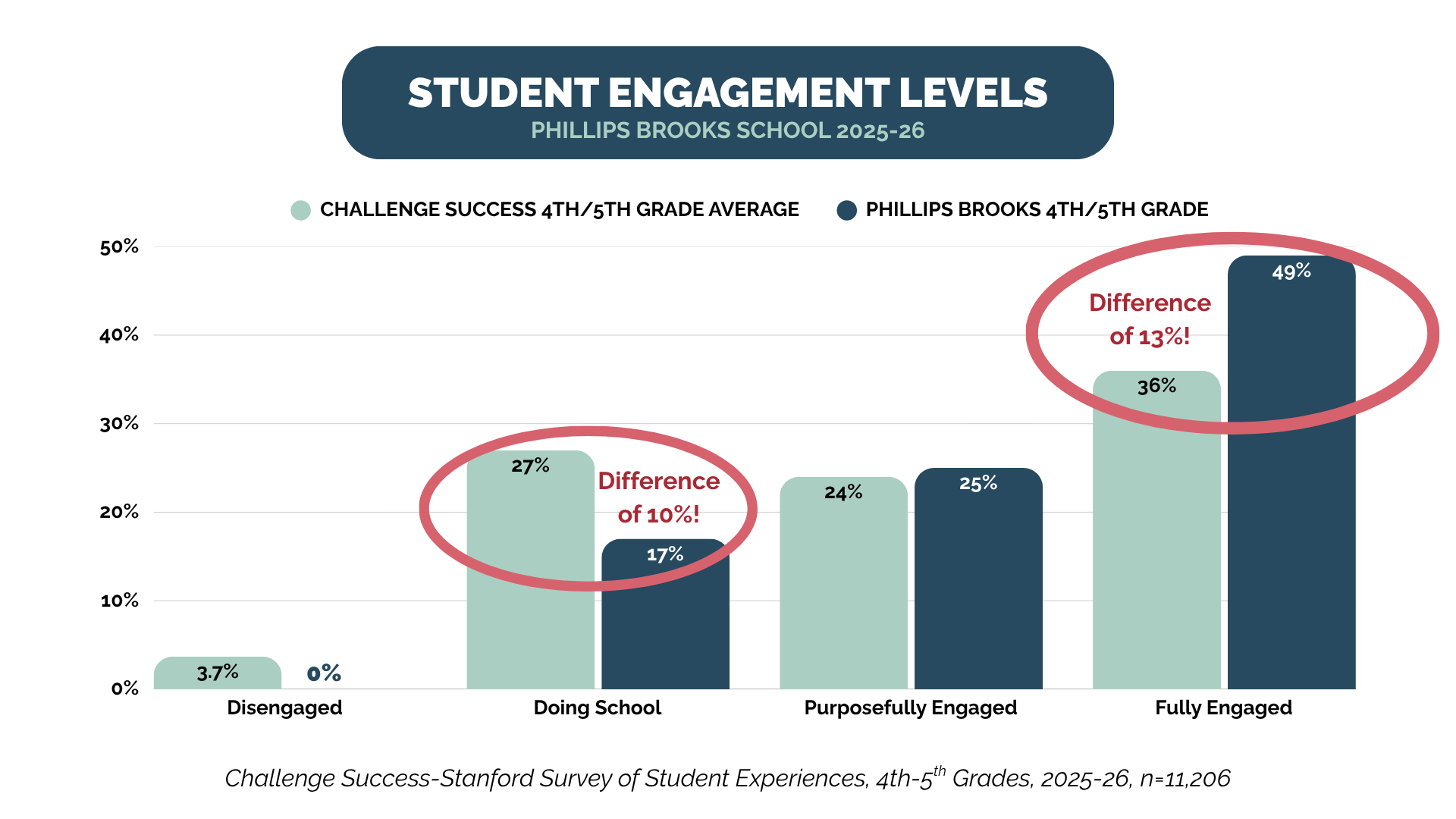
SP: We really dug into our data around student engagement. As a school who has “Love of Learning” as a core value, we would love to see 100% of students expressing complete engagement (cognitive, behavioral, affective, agentic) as that’s a core piece of our identity. Seeing specific data around this really helped us think about who we are serving best and how we can shift some of our pedagogical practices to more fully activate curiosity, interest, and love of learning for all students.
CS: What have you learned about what helps young students feel known, engaged, and a strong sense of belonging?
SP: When students feel truly heard, and when their peers and teachers remember what they share, it fosters a profound sense of belonging. While this is already a core strength of our school, our partnership with Challenge Success is helping us deepen these connections even further. One of the really powerful practices from the Challenge Success survey was doing the proactive work to ask students about their connectedness.

SP (continued) : Our Challenge Success coach introduced us to “The 2×10 Protocol.” In this protocol, the team can sit down and look at the students who don’t feel like they have an adult to go to and we assign someone to any student who is feeling this way. The adult then makes a point to connect with that child informally for just two minutes a day for the next ten days. An informal conversation while walking to class or a short conversation at lunch can go such a long way. We’re working now on making this practice more regular and systematic.
CS: How has student feedback—through survey data or other listening strategies—shaped decisions or sparked changes in practice?
SP: The PBS culture has always prioritized student voice through emotional check-ins, reflections, and moments of informal feedback. Taking the time to really systematize and prioritize our questioning and feedback has led to greater insight around student experience. We’re finding the more we survey, the more questions we have. This spring we’re piloting more specific questions to elicit more feedback from students. Sharing data back with students has also been extremely helpful and helped continue to keep them in the driver’s seat at school.
Keeping student feedback at the center has led to not only changes in practice, but also elevated excitement and engagement just through the process itself. We had a kindergarten class petition for a water slide to be installed on campus and were able to follow through with a slip and slide day. Our fourth and fifth graders have been asking for club time and we’re finding ways to build that into next year’s schedule so that club time won’t take away from recess. Without major changes in practice, simply recognizing the ways in which students can make true change helps elevate everyone’s sense of engagement.
CS: What challenges have you encountered in this work?
SP: We’ve always wanted our students to have a seat at the table, but we realized early on that a standard committee meeting isn’t always the best fit for how their minds work. At this age, kids live vibrantly in the “now.” An argument on the playground or a fantastic science lab can completely change their outlook for the day. To honor that, we’ve pivoted. Instead of asking a few students to help us plan the “big picture,” we now use frequent, short surveys for the whole student body. This helps us hear from everyone, not just the most vocal students, and allows us to see past the daily ups and downs to understand the real, overall trends in our school community.
CS: What advice would you offer to other elementary school leaders who want to strengthen well-being, engagement, and belonging in their schools?
SP: My first piece of advice is to treat student well-being not as a “soft skill,” but as the absolute foundation of your school’s culture. We know from research that when students feel a deep sense of belonging and engagement, academic achievement and personal growth naturally follow. They aren’t competing priorities; they are codependent. It’s a “both, and” conversation. We’ve worked hard to keep the question, “What’s best for students?” at the front of our minds. We use it as a literal filter in our leadership meetings and faculty meetings to ensure our logistics never outpace our values.
Beyond that, I recommend moving away from top-down problem-solving. Instead, tap into the collective ‘brainpower’ of your teachers and students. This means getting out of the office and into the classrooms, not for formal evaluations, but to truly listen. When you make reflection a regular, low-stakes part of the school day, you start to surface concerns while they are still small and manageable. This shift allows you to move away from being a ‘firefighter’ and instead empowers your entire school community to work together as a proactive team of problem-solvers.

CS: Looking ahead, where do you see this work going next and how will you sustain your efforts?
SP: Looking ahead, we’re excited about implementing more of our work. Our CS team is currently running a leadership audit to look at the various opportunities that already exist for our kids, looking at whether the kids really recognize these opportunities in the ways we think they do, and brainstorming additional ways to build in student autonomy and agency. Other team members are looking at how we can use our alumni as resources for our current fifth grade families and students. We will continue with our committee structure, as it has allowed for regular check-ins and kept these efforts on the calendar even during the more stressful times in the school year.
With all of our ideas and initiatives, we’re looking at how to really systematize the efforts so that they just become part of what we do, rather than feel like an extra add. When we center the student experience and really think about how to make our ideas part of our culture or way of being, the additional steps actually make our lives easier. At the end of the day, when engagement, belonging, and well-being are high, the act of teaching is infinitely more inspiring to the adults as well – and that helps sustain all of us!
Bring Challenge Success to Your School/District: Learn more about our Challenge Success School Partnership, now available for elementary, middle, and high schools.

Sara Poplack is the Associate Head of School for Academics at Phillips Brooks School in Menlo Park. She has dedicated much of her career to elementary education, with a deep focus on crafting effective professional development, innovative curriculum, and impactful instructional coaching systems. Prior to her current leadership role, Sara served as the Director of Instructional Coaching for a nonprofit pilot program aimed at reimagining mathematics intervention in low-performing school districts. During her career, she taught several elementary grades and held several key administrative positions, including Division Head, Assistant Division Head, Curriculum Coordinator, and Director of Admissions.
Challenge Success, a nonprofit affiliated with the Stanford Graduate School of Education, elevates student voice and implements research-based, equity-centered strategies to increase well-being, engagement, and belonging in K-12 schools.